Just when humanity was feeling smug about surviving another week of inflation, climate dread, AI existentialism, and whatever was trending on social media at 3 a.m., Sir David Attenborough, the universally trusted narrator of Earth itself, allegedly cleared his throat.
He looked toward the heavens.

He delivered the last sentence you ever want to hear from a man whose voice usually calms penguins and reassures nervous schoolchildren.
According to reports now ricocheting across headlines and timelines, the James Webb Space Telescope has detected something in deep space that Attenborough himself reportedly described as “deeply unsettling.
” In Attenborough language, this roughly translates to “you may want to sit down.
” The moment his name got attached to the phrase terrifying object in space, the internet reacted exactly as expected.
It immediately assumed the universe has finally noticed us.


It is no longer impressed.
The story begins, as all modern apocalypses do, with a telescope that cost ten billion dollars.
It floats a million miles from Earth.
It sees so far back in time it can practically watch the universe being born.
When the James Webb Telescope observes something unusual, it is not spotting a blurry dot.
It is reading the fine print of existence itself.
According to leaked summaries, overheated interpretations, and a growing collection of dramatically cropped images, Webb has detected an object that does not behave the way cosmic objects are supposed to behave.
It appears massive.
It appears unusually cold.
It appears oddly structured.
It is positioned in a region of space where nothing like it should logically exist.
This is the kind of sentence that makes astrophysicists excited.
It makes journalists hyperventilate.
It makes conspiracy influencers clear their schedules.
Enter Sir David Attenborough.
His involvement alone upgraded this from “interesting anomaly” to “possible end-of-days teaser trailer.”
When a man who has calmly narrated volcanoes, mass extinctions, melting ice caps, and humanity’s greatest mistakes suddenly expresses concern, people listen.

According to one widely shared quote that may or may not have been slightly massaged for dramatic effect, Attenborough allegedly remarked that “what we are seeing challenges our understanding of the universe in ways that should give us pause.”
This is British understatement for “this thing is weird and I don’t like it.”
Within minutes, headlines added the word terrifying.
Thumbnails added red circles.
YouTube videos added ominous music that sounded like the universe charging up.
So what exactly did James Webb see.
Or think it saw.
Or glimpse just enough of to ruin everyone’s mood.
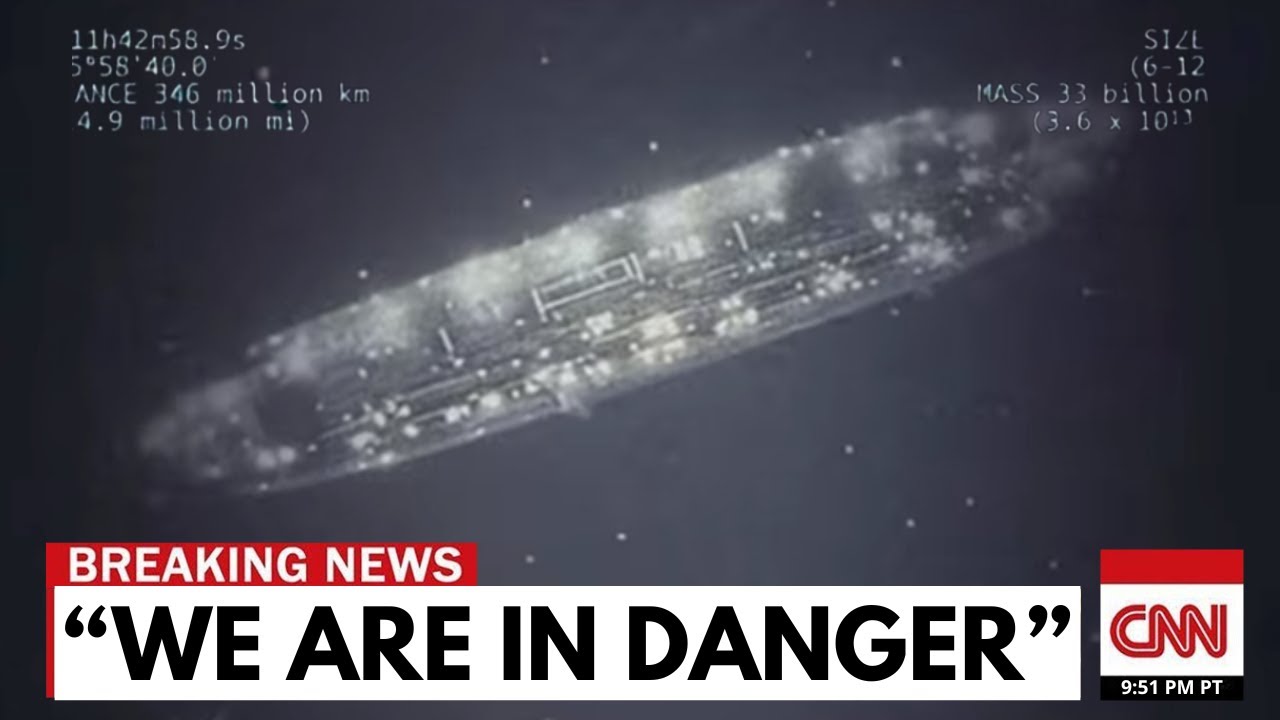
Depending on which article, thread, or late-night livestream you consume, the object is either a rogue supermassive structure.
It is a collapsed star behaving badly.
It is a cold cosmic void that appears to be swallowing light.
According to one particularly enthusiastic TikTok astrophysicist with a green screen, it is “a non-biological megastructure with intentions.”
This is not a phrase anyone should say casually.
Yet here we are.
Preliminary analyses suggest the object emits no recognizable energy signature.
It bends surrounding radiation in an unusual way.
It appears older than expected.
It looks as if it existed before the region of space around it fully formed.
One real scientist, speaking very carefully, described it as “anomalous.

” A fake expert calling himself a “galactic threat analyst” declared on a podcast that “this is the universe’s version of a locked door we were not supposed to open.
”
Naturally, social media did what social media does best.
It took limited information and immediately sprinted into cosmic hysteria.
One camp insisted this was proof of alien civilization.
Another insisted it was evidence of a dying universe folding in on itself.
A third insisted it was all fake because “NASA lies.”
These same people somehow believe NASA built a telescope capable of staging the lie in the first place.
The memes followed instantly.
Images of the object were captioned “Sir David Attenborough when even he’s concerned.”
Others joked that the universe finally sent Earth a read receipt.
Beneath the humor sat a genuine unease.
This was not framed as beautiful.
It was not framed as mysterious.
It was not framed as inspiring.
It was framed as terrifying.
That word stuck like cosmic glue.
According to preliminary scientific briefings, the object’s behavior defies several established models.
It appears to absorb or distort light in a way that does not align cleanly with known black holes, neutron stars, or interstellar clouds.
Theorists began whispering phrases like “exotic matter” and “unknown formation mechanism.
” These are academic ways of saying we do not have a good explanation yet.
History has taught humanity that unexplained things in space tend to age poorly.
First they are anomalies.
Then they are documentaries.
Then they are Reddit threads titled “We Ignored the Signs.”
Attenborough’s involvement added an emotional weight rarely attached to astrophysics.
He is not a man known for panic, hype, or sensationalism.
When asked about the discovery, one supposed insider claimed Attenborough was “visibly troubled.”
This may or may not be true.
It sounded good enough to spread like wildfire.
Then came the dramatic twist.
As more data emerged, some researchers suggested the object could be a massive cold structure formed from early-universe material.
It may be something so ancient and dense that it challenges the timeline of cosmic evolution itself.
One astrophysicist remarked that “if confirmed, this object forces us to reconsider when complexity in the universe truly began.”
This sounds academic until you realize it implies the universe may have been building unsettling things long before life on Earth figured out fire.
Suddenly, the terror shifted from invasion to insignificance.
Nothing unsettles humans more than the idea that the universe is not chaotic.
It is quietly busy doing things we do not understand.
Fake experts could not resist.
Quotes flooded the internet.
One was attributed to a “former SETI consultant” who claimed the object “shows signs of intentional symmetry.”
This was later debunked by someone pointing out symmetry exists everywhere, including your kitchen tiles.
The damage was already done.
Livestreams exploded with speculation.
Hosts asked questions like “what if it’s watching.
” They asked “what if it’s dormant.
” They asked “what if Attenborough knows more than he’s saying.
” Paranoia loves a trusted narrator.
Some commentators began connecting dots that were not even in the same galaxy.
They linked the object to fast radio bursts.
They linked it to unexplained cosmic signals.
They linked it to that one time your phone glitched for no reason.
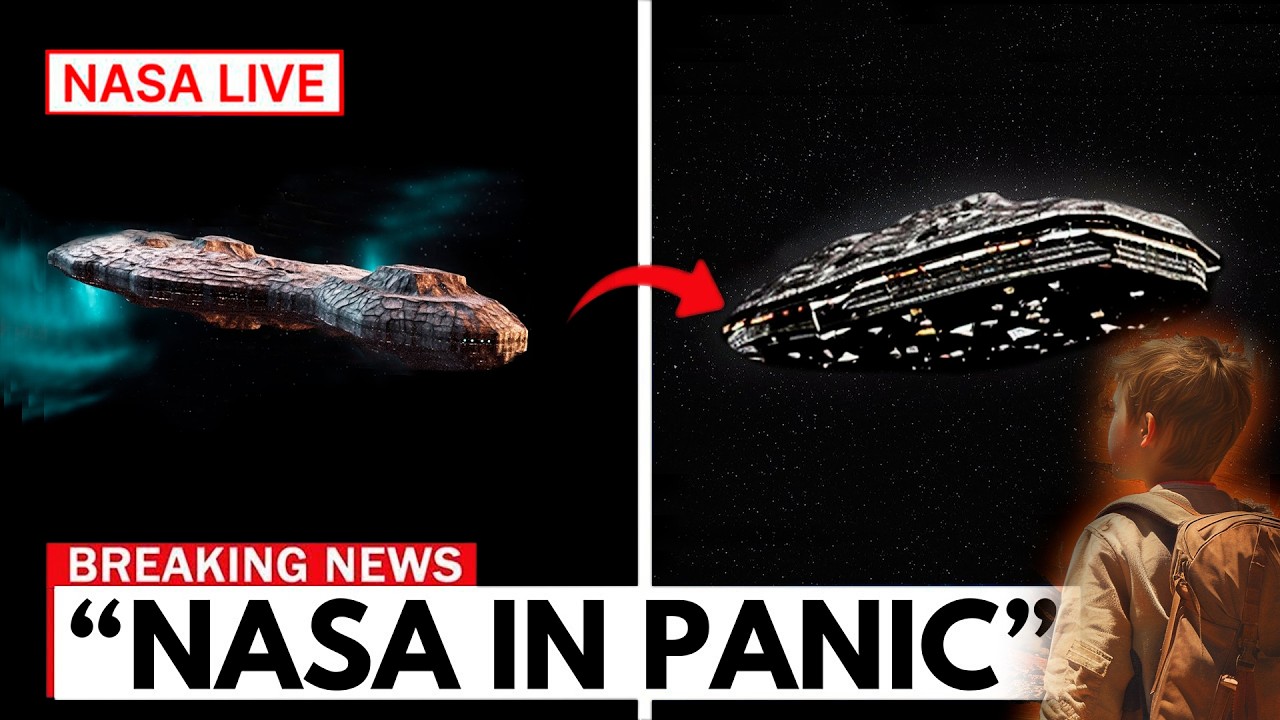
NASA and ESA, sensing the vibes getting out of hand, attempted to calm the situation.
They released carefully worded statements emphasizing that the object poses no known threat to Earth.
This immediately convinced half the internet that it absolutely does.
Nothing fuels suspicion like reassurance.
One viral tweet summed up the public mood perfectly.
“If Sir David Attenborough is nervous, I’m nervous.
” It garnered hundreds of thousands of likes from people who do not know what the object is.
They do not know where it is.
They do not know how physics works.
They trust vibes more than equations.
Real scientists urged patience.
They reminded the public that Webb is designed to see things humanity has never seen before.
Novelty often feels threatening before it becomes understood.
Patience is not exactly humanity’s strongest trait.
Headlines were screaming terrifying.
Thumbnails were glowing red.
One tabloid-friendly astronomer leaned into the drama.
“This is either a breakthrough in cosmology or the universe trolling us.”
That felt like the most honest take yet.
As the debate raged, conspiracy theories evolved at light speed.
Some claimed the object is evidence of a simulation boundary.
Others insisted it is a cosmic weapon.
One particularly creative thread argued it is the universe’s immune system responding to intelligent life.
This sounds absurd.
People once thought comets were omens.
Beneath the noise sat a quieter philosophical dread.
If the universe contains objects so old, so massive, and so indifferent that they break our models simply by existing, then maybe the terrifying part is not what Webb detected.
It is how small and temporary we suddenly feel in comparison.
Sir David Attenborough has not declared the end of days.
He has not narrated the object with ominous music.
He has not told humanity to panic.
His association with the discovery has already done its work.
When the calmest voice in science communication hints at unease, it pierces deeper than any screaming headline.
As more data trickles in, the object remains exactly where it is.
It sits billions of miles away.
It does whatever unsettling thing it has apparently always been doing.
Earth spins.
Humans argue.
The internet refreshes obsessively for updates.
In the end, the James Webb Telescope did what it was built to do.
It showed us the universe not as we want it to be, but as it actually is.
Vast.
Ancient.
Complex.
Occasionally horrifying in its indifference.
Whether the object turns out to be a misunderstood natural phenomenon or something genuinely paradigm-shifting, the reaction says more about us than about the cosmos.
Faced with the unknown, humanity still responds the same way it always has.
We respond with awe.
We respond with fear.
We respond with jokes.
We respond with speculation.
We respond with a desperate need for someone trustworthy to explain it.
If that someone happens to be Sir David Attenborough, then perhaps the most comforting thought is this.
Even when the universe looks terrifying, at least it is being narrated by a voice we trust.
Whatever that object is out there in the dark, it may be ancient.

It may be powerful.
It may be incomprehensible.
For now, it is still just a reminder.
The universe is bigger than our comfort zone.
That alone is enough to keep us staring upward.
Nervously laughing.
Refreshing the news.