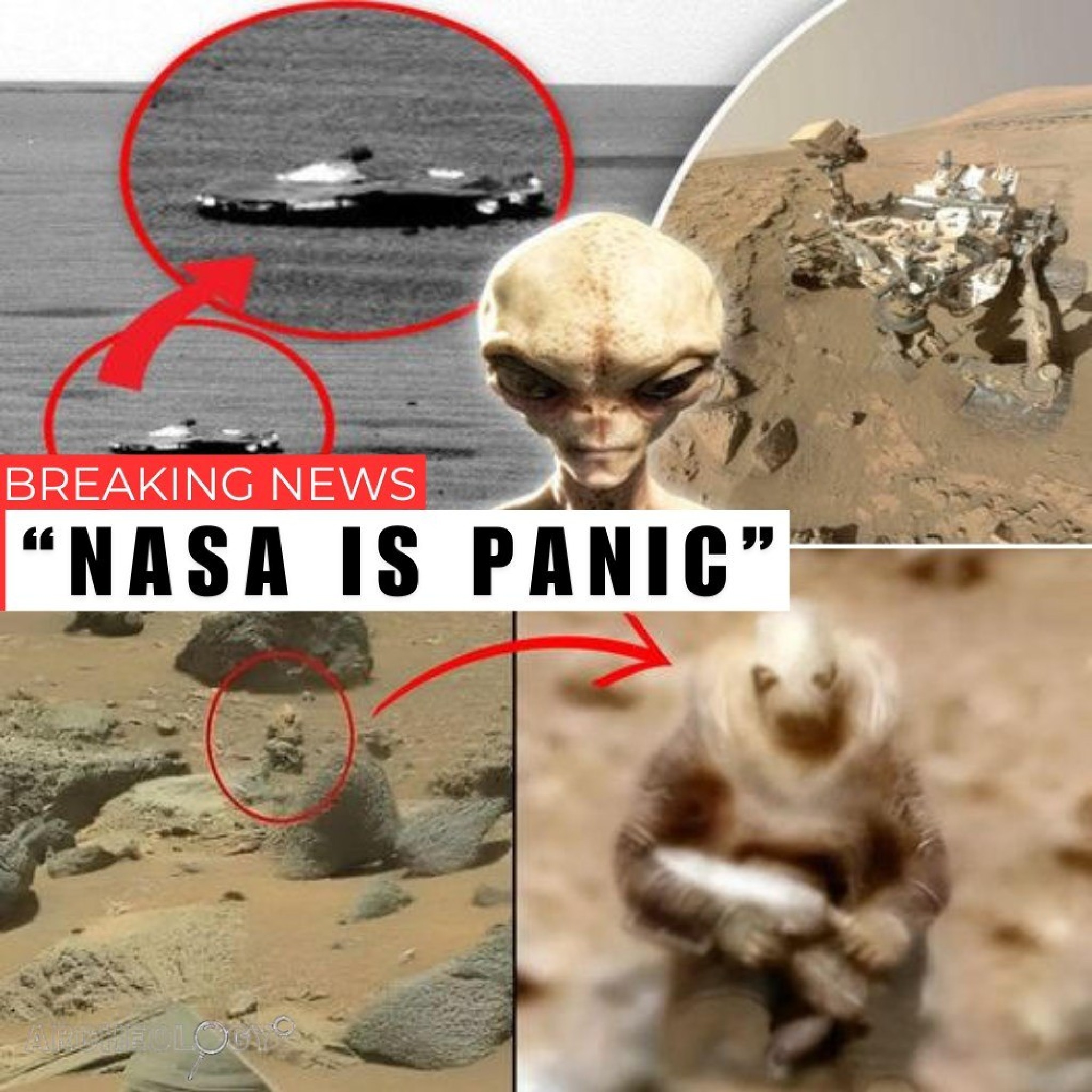

PASADENA, CA – A decade-old pH๏τograph from the Red Planet has returned to haunt the scientific community. An image captured by NASA’s Curiosity Rover in 2015 has suddenly gone viral across global forums, after independent analysts used modern AI-enhancement tools to reveal what many believe is a partially buried, saucer-shaped craft.

The original frame, part of a routine panoramic sequence taken in the rugged terrain of Gale Crater, initially pᴀssed through NASA’s archives without much fanfare. However, the recent resurfacing of the high-resolution RAW data has sparked a firestorm of speculation.

- Geometric Symmetry: Unlike the jagged, wind-eroded sedimentary rocks common to Mars, the object appears to have a distinct, circular rim.
- Material Contrast: Some analysts point to a subtle metallic sheen on the exposed portion of the “disc,” which stands in stark contrast to the surrounding red oxide dust.
- Strategic Placement: The object appears to be wedged into a ridge, leading theorists to suggest a “crash-landed” scenario from a distant epoch.
NASA’s Stance: The Power of Pareidolia
NASA officials and planetary geologists have been quick to temper the excitement. The agency maintains that the “mysterious disc” is a classic example of pareidolia—the human tendency to see familiar shapes in random patterns.